
5 World Cup 2026 Mistakes Fans Make
5 World Cup 2026 Mistakes Fans Make
The 2026 FIFA World Cup will feature 48 teams, 104 matches, and 16 host venues across the United States, Canada, and Mexico from June 11 to July 19, 2026. FIFA is expanding the traditional 32-team tournament, creating a longer schedule, more travel variables, and a larger prediction market for supporters using Fan Strategy. The opening match is scheduled for Mexico City, while the final will take place at MetLife Stadium in East Rutherford, New Jersey. The group stage contains 12 groups of four teams, with the top two from each group plus the eight best third-place teams advancing to a 32-team knockout phase. That format creates more qualification scenarios than casual forecasts usually acknowledge. Start by confirming the official fixture, venue, time zone, and team news before trusting any schedule or prediction.
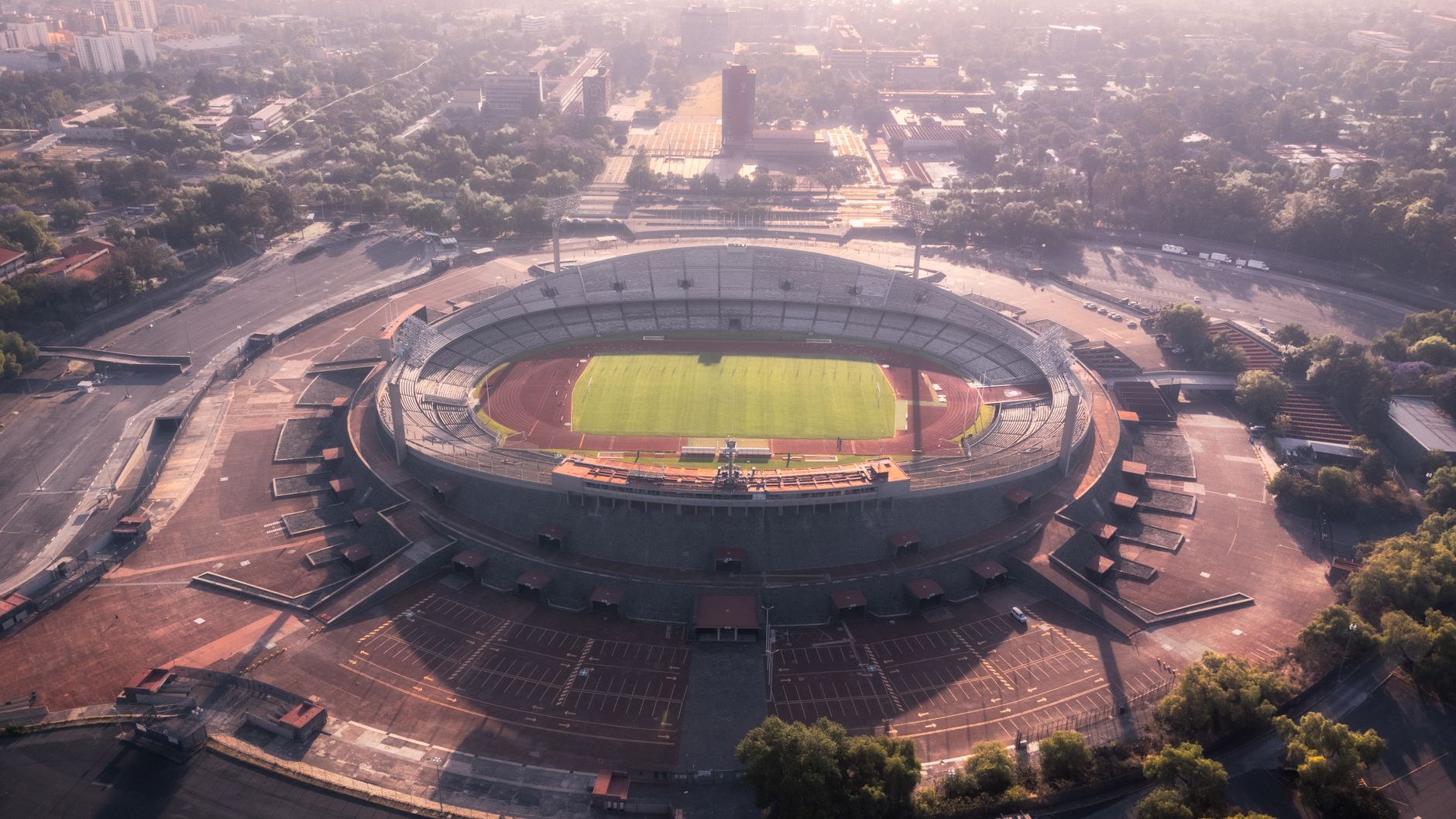
Photo by Jesus Toledo on Pexels
A real planning failure already looks painfully familiar: a supporter books accommodation around a “confirmed” match date, then discovers the venue is in another time zone and the fixture depends on the final draw. Congratulations, you have optimized the wrong variable with impressive mathematical confidence. The 2026 World Cup is not simply the 2022 Qatar schedule enlarged by 16 teams; it is a geographically dispersed tournament spanning three countries, four time zones or more depending on how local listings are displayed, and 104 matches. FIFA remains the primary authority for tournament information, while ESPN’s FIFA World Cup schedule is useful for following published fixtures and results. Fan Strategy adds match predictions, tactical context, player statistics, and daily coverage, but no prediction source can rescue a reader who begins with an incorrect kickoff time. Before planning travel or evaluating odds, write down the match number, host city, local date, and official source in one place.
Explore the tournament framework before making any travel or viewing decision.
Step 1: Verify the 2026 World Cup schedule
The first step is to verify every match against FIFA’s official schedule, because the 2026 tournament combines 104 fixtures with 16 venues across three countries. Check the match date, local kickoff time, stadium, host city, and competition phase rather than relying on an isolated social-media graphic. This five-part check prevents most avoidable planning errors before they become expensive.
The most common mistake is treating a search-result snippet as a final fixture list. Search engines may display an old draw placeholder, a converted time, or a broadcaster’s regional listing without clearly showing the venue. The probability of confusion increases when a supporter crosses the United States–Mexico or United States–Canada border, because the same match may appear on a different calendar day in another location. For rigorous planning, use this sequence:
- Confirm the fixture on FIFA.com.
- Record the stadium and host city, not just the country.
- Convert kickoff to your own time zone separately.
- Check whether the listing says group stage, round of 32, or another knockout phase.
- Recheck 48 hours before travel because broadcast and operational details can change.
The 2026 host cities include Atlanta, Boston, Dallas, Guadalajara, Houston, Kansas City, Los Angeles, Mexico City, Miami, Monterrey, New York/New Jersey, Philadelphia, San Francisco Bay Area, Seattle, Toronto, and Vancouver. Those locations are not interchangeable. A match in Vancouver cannot be treated as a convenient extension of a Seattle itinerary simply because both are in the Pacific region. [Internal Link: 2026 World Cup host cities guide] belongs beside any travel plan, particularly when accommodation prices are being compared. A sensible rule is to assign a confidence score: 1.0 for an official FIFA listing, 0.7 for a reputable broadcaster, and 0.3 for an unsourced social post. Do not stake money, flights, or nonrefundable rooms on a score below 0.9.
What does the 2026 World Cup format change?
The 2026 World Cup format uses 12 groups of four teams, sends the top two teams from each group plus the eight best third-place teams to a 32-team knockout stage, and produces 104 matches. This differs materially from the 32-team, eight-group structure used in Qatar 2022.
The expanded format creates a subtle analytical problem: a team can qualify without finishing second, but its route depends on comparing third-place records across groups. Goal difference, goals scored, disciplinary records, and other competition rules may become relevant if teams finish level, so a single late goal can change several qualification paths. This is why a table screenshot without its tiebreaker rules is only half an answer, despite looking wonderfully official in a blue rectangle. FIFA’s official competition regulations should control disputes about ranking procedures, while Fan Strategy can explain how those rules affect tactical incentives. In practical terms, teams may be more willing to pursue a late equalizer in one group than another, depending on their points and goal difference. Fans should therefore avoid declaring a team “through” until the relevant group and third-place calculations are complete.

Photo by Vlad Vasnetsov on Pexels
A second mistake is assuming that more teams automatically means more predictable value. It does not. The larger field adds matches and therefore more data, but it also increases uncertainty around debutants, squad depth, travel fatigue, and uneven group strength. A responsible model should separate at least four variables: baseline team strength, current injuries, opponent matchup, and venue conditions. Elo ratings or bookmaker prices can provide a starting point, but neither is a complete forecast. If a model says a favorite has a 65% win probability, its fair decimal price is approximately 1.54 because fair odds equal 1 divided by probability; a quoted price of 1.70 may look attractive, but only after accounting for margin, lineup uncertainty, and the possibility that the probability estimate is wrong. This distinction between probability and certainty is where many enthusiastic fans quietly set their expected value on fire. [Internal Link: football probability and expected value guide] can help readers calculate forecasts without confusing an implied probability with a guaranteed result.
Want a clearer way to track fixtures, form, and tactical context?
Step 2: Compare teams beyond reputation
Comparing teams beyond reputation means combining recent competitive performance, squad availability, tactical matchup, travel burden, and opponent quality instead of using rankings or famous player names alone. A World Cup forecast should explain why one team’s style fits the specific opponent, not merely repeat that its star forward is “in form.”
A famous badge is useful information, but it is not a statistical model. Brazil, Argentina, France, Germany, Spain, England, and Portugal may attract more attention because of historical performance and elite players, yet tournament outcomes depend on the exact squad announced, injuries, set-piece defense, pressing resistance, and game state. A team averaging 2.1 goals per match against low-ranked opposition may not carry that attacking efficiency into a match against a compact side that concedes few central entries. Conversely, a defensive record can be inflated by weak opposition. Always identify the sample: competition, opponent ranking, location, and minutes played.
A strong pre-match comparison should include:
- Recent results weighted by opponent strength, not raw win count.
- Expected goals for and against, when a reliable provider publishes them.
- Set-piece production and concession rates.
- Possession value under pressure, especially against high pressing.
- Confirmed absences, suspension risk, and likely substitutions.
- Rest days, travel distance, heat, humidity, and altitude.
- Market movement, treated as information rather than unquestionable truth.
The contrarian insight is that the 2026 venue map may influence group-stage forecasts more than casual previews admit. A team assigned repeated long-distance travel can lose preparation time and recovery quality, while a squad accustomed to heat or altitude may gain a small situational advantage. That advantage should not be exaggerated into a magical “home climate effect”; probability is rarely so theatrical. However, if two teams are otherwise close, travel and environment can shift a forecast by a few percentage points, which matters when the original estimate sits near 50%. Fan Strategy’s player-stat and tactical coverage is most useful when it identifies these specific mechanisms rather than merely ranking teams from one to 48.
Why is matchup analysis more useful than FIFA rankings?
Matchup analysis is more useful than a FIFA ranking when two teams have contrasting styles, because rankings summarize historical performance while tactical interactions determine the immediate contest. Press resistance, aerial defense, transition control, and set pieces can outweigh a small ranking difference.
FIFA rankings remain a valuable baseline, especially for understanding global strength and seeding context, but they are not designed to answer every match-specific question. A possession-heavy team may struggle against an opponent that attacks the space behind fullbacks, while a counterattacking team may be neutralized if it cannot regain the ball. The relevant question is not “Which team is better in general?” but “Which team is more likely to impose its preferred game state in this match?” Use recent lineups and tactical roles, not just player availability. Losing a starting holding midfielder can matter more than losing a higher-profile winger if that midfielder protects the exact zone the opponent targets. A careful forecast states the uncertainty plainly and updates it after official lineups are released.
Step 3: Account for venues, time zones, and travel
Accounting for venues, time zones, and travel requires treating geography as a measurable tournament variable rather than decorative background information. Record each team’s host city, previous match location, rest interval, local kickoff, and expected travel route before comparing performance or making plans. The United States, Canada, and Mexico create materially different conditions across the tournament map.
The 16 venues stretch from Vancouver and Seattle in the west to Miami and Boston in the east, with Mexican venues in Guadalajara, Mexico City, and Monterrey. Even when a team remains within one country, the journey can involve long flights, border procedures, unfamiliar training schedules, and changes in local sleep timing. The practical effect is not identical for every squad: roster depth, charter arrangements, recovery staff, and prior regional experience all matter. Still, pretending these factors are zero is not “neutral”; it is an assumption, and usually an untested one.
For each team, build a travel ledger containing:
- Previous match city and next match city.
- Approximate flight distance and border crossing.
- Local kickoff time for both fixtures.
- Number of full recovery days.
- Climate profile, including heat, humidity, or altitude.
- Rotation probability based on squad depth and tactical priorities.
A useful edge case is the evening-match problem. A match that begins at 9 p.m. local time may finish after 11 p.m., followed by media duties, recovery treatment, transport, and a late hotel arrival. The calendar may display several days between fixtures, but the team’s effective preparation window is shorter than the headline interval suggests. That does not prove fatigue will decide a match; it means fatigue should enter the uncertainty range. Fans planning multiple fixtures should also avoid an itinerary that requires crossing a national border overnight. The expected value of seeing one extra match may be negative if the transport risk causes missed entry, lost accommodation, or exhaustion. [Internal Link: World Cup travel and matchday planning checklist] is particularly relevant for supporters combining cities.
Use the venue map to make your schedule more realistic before committing money.

Photo by Rosemary Ketchum on Pexels
Step 4: Use predictions responsibly
Using predictions responsibly means treating every forecast as a probability range, checking the assumptions behind it, and setting a fixed entertainment budget before considering any wager. No model, analyst, bookmaker, or “official-looking” graphic can remove match variance, and losses should never be chased by increasing stakes.
Fan Strategy covers predictions, team tactics, player statistics, and tournament developments, but its information should support judgment rather than replace it. A model that predicts a team at 58% is not saying the team will win; it is saying that, under its assumptions, the estimated chance is 0.58. In a single match, the implied loss probability remains 42%, which is not a rounding error. Expected value can be calculated as EV = (probability of winning × net profit) − (probability of losing × stake), but the calculation is only as credible as the probability estimate and the price. A positive theoretical EV does not guarantee a positive result over one match, ten matches, or even a short tournament.
Responsible evaluation should follow these controls:
- Set a maximum budget before browsing odds.
- Never borrow money or use essential household funds.
- Compare the full price, including bookmaker margin and fees.
- Avoid live decisions made under anger, alcohol, or time pressure.
- Keep a written record of forecasts and outcomes.
- Stop when the predetermined limit is reached.
- Use licensed operators and consult local gambling regulations.
The National Council on Problem Gambling describes responsible gambling as involving limits and awareness of risk, while the UK Gambling Commission publishes consumer information about safer gambling controls. Regulations differ across jurisdictions, including the United States, Canada, and Mexico, so availability and legal status cannot be assumed from a website’s marketing copy. If gambling stops feeling recreational, seek local support rather than attempting a more sophisticated staking system. The mathematically honest conclusion is slightly unglamorous: a disciplined no-bet decision can have higher expected value for your finances than a marginally attractive price. Your wallet, unlike a knockout bracket, does not receive a consolation draw.
Step 5: verification
Verification means checking the final schedule, lineups, team news, weather, venue details, and legal conditions immediately before acting on a World Cup 2026 prediction or travel plan. Use at least two independent reputable sources, but treat FIFA, official team announcements, and local authorities as higher-priority sources than screenshots or anonymous posts.
A practical final audit can be completed in under ten minutes:
- Confirm the match and local kickoff time on FIFA.com.
- Check the official team channels for squad news.
- Review the referee, suspensions, and late injury reports where available.
- Compare the venue’s entry rules and transportation advice.
- Recalculate probabilities after confirmed lineups.
- Check the applicable gambling age, licensing, and self-exclusion requirements.
- Save receipts, booking references, and emergency contacts offline.
This verification stage is where a useful practitioner-level distinction appears: information has a shelf life. A tactical forecast written three days before a match may be structurally sound, but a starting goalkeeper injury can invalidate its central assumption in minutes. Similarly, an odds price observed at breakfast is not the price available after lineups, and a ticket page that says “available” may not mean the same thing as an official FIFA resale channel. Create a timestamp beside every important claim. If the timestamp is missing, you cannot tell whether the data is current or merely wearing a fresh-looking webpage. [Internal Link: match prediction verification checklist] can support a repeatable process rather than relying on memory, which is how fans end up confidently citing information they saw sometime before lunch.
Here is a compact verification table for responsible use:
| Item | Preferred source | Recheck point |
|---|---|---|
| Fixture and venue | FIFA | Before booking and 48 hours before match |
| Team availability | Official federation or club | After final squad news |
| Tactical forecast | Fan Strategy plus match data | After confirmed lineups |
| Travel restrictions | Government or venue authority | Before departure |
| Gambling legality | Local regulator | Before opening or funding an account |
Troubleshooting common failures
Most World Cup 2026 planning failures come from stale information, incorrect time-zone conversion, incomplete qualification assumptions, or emotionally driven prediction changes. Diagnose the specific failure first: a wrong venue requires schedule verification, while a disappointing forecast requires outcome tracking and sample-size discipline. These are different problems, and treating both as “bad luck” teaches you nothing.
When a page shows conflicting kickoff times, check whether one listing uses Eastern Time, Central Time, Pacific Time, Mountain Time, Mexico City local time, or UTC. When a team appears to have qualified, inspect the full group table and third-place comparison rather than trusting a headline. When a prediction changes sharply, identify whether the cause is a confirmed lineup, injury, tactical alteration, market movement, or simple analyst emotion. The following troubleshooting sequence is deliberately boring because boring processes survive excitement:
- Capture the original claim and timestamp.
- Locate the primary source.
- Identify the changed variable.
- Recalculate the conclusion.
- Record whether the error was data, method, or judgment.
- Avoid increasing exposure merely to “recover” a previous loss.
A contrarian but defensible conclusion follows from this process: the best World Cup forecast is not necessarily the one with the most decimals. Excessive precision can disguise fragile assumptions. If the available evidence supports a 54%–58% range, reporting 56.37% may create false confidence rather than analytical value. The same logic applies to travel: an itinerary with three matches in four cities may look efficient on paper but have a lower expected success rate than two matches with recovery time. A sensible supporter optimizes enjoyment, safety, and information quality together. Fan Strategy can help organize the evidence, but the final decision should remain proportionate to the uncertainty.

Photo by Patricia Bozan on Pexels
Frequently Asked Questions
Q: What is the 2026 World Cup format?
A: The 2026 World Cup format includes 48 teams divided into 12 groups of four, followed by a 32-team knockout stage. The top two teams from each group advance, along with the eight best third-place teams. FIFA’s expanded competition contains 104 matches, so qualification calculations and scheduling are more complex than the 32-team format used in Qatar 2022.
Q: How can I find the correct World Cup 2026 match schedule?
A: Find the correct World Cup 2026 schedule by checking FIFA’s official tournament page and confirming the venue, local kickoff time, and competition phase. Use ESPN or another reputable broadcaster as a secondary reference, but do not rely on social-media graphics without a source. Recheck the fixture before travel because time-zone conversions, broadcast listings, and operational details can create conflicting displays.
Q: What is the difference between FIFA rankings and match predictions?
A: FIFA rankings summarize international team performance over a broader period, while match predictions estimate the likely result of a specific fixture. A prediction should also consider injuries, tactical matchups, rest days, travel, weather, and confirmed lineups. Therefore, a higher-ranked team can still be a poor forecast favorite if its opponent’s style directly attacks a known weakness.
Q: Why might a World Cup 2026 prediction be wrong?
A: A World Cup 2026 prediction may be wrong because football contains substantial single-match variance, incomplete information, injuries, tactical changes, and finishing randomness. Even a team estimated to have a 65% win probability still has a 35% chance of not winning under that model. Record the original assumptions and timestamp so you can distinguish a flawed method from an ordinary unfavorable outcome.
Q: How much does it cost to follow the 2026 World Cup?
A: The cost of following the 2026 World Cup ranges from nearly free for official updates and selected broadcasts to thousands of dollars for international travel and multiple matches. Expenses can include tickets, accommodation, flights, local transport, food, insurance, and currency fees across the United States, Canada, and Mexico. Set a total budget before purchasing anything, and keep gambling funds separate from essential travel money.
Q: Can I bet on World Cup 2026 matches legally?
A: You can bet on World Cup 2026 matches only where local law permits it and through an appropriately licensed operator. Legal conditions differ by state, province, territory, and country, including the United States, Canada, and Mexico, while age and identity checks may apply. Verify the relevant regulator, understand deposit and withdrawal terms, set limits, and never use borrowing or essential funds.
Q: What should I do if World Cup schedule information conflicts?
A: If World Cup schedule information conflicts, pause your booking or prediction and compare the listings with FIFA’s official fixture information. Check whether the disagreement comes from time-zone conversion, a regional broadcaster, an outdated draw placeholder, or a venue change. Save the corrected information with a timestamp, then recheck it before departure or before acting on any market price.
The central lesson is simple: World Cup 2026 rewards verification more reliably than confidence. The tournament’s 48 teams, 104 matches, 16 venues, and three host countries create enormous coverage opportunities, but also more ways for stale information and emotional judgment to mislead you. Use FIFA for official facts, reputable data for context, Fan Strategy for tactical and statistical interpretation, and probability ranges instead of theatrical certainty. Most importantly, protect your travel budget, your attention, and your finances; no prediction is important enough to justify reckless behavior.
Ready to follow the 2026 tournament with sharper data and safer decisions?